很多品牌主投完高铁站广告,最爱说一句话:“我觉得有效果。”
“觉得”最没用。高铁站广告不是抖音,没法直接看播放量、点击率、转化率。但不代表没法衡量。只要提前设计好评估方式,照样能算清楚这笔账。
衡量方法分三层:曝光层、行为层、认知层。
一、曝光层:先算清楚有多少人看到
高铁站广告的曝光量,可以用官方客流数据估算。
玉林北站目前日均客流五六千,旅客进站后停留30到40分钟。一块LED大屏如果覆盖整个候车厅,按80%可见系数估算,每天实际触达约4000到5000人次。一块灯箱如果位于进站通道,可见系数可能只有30%到50%,因为有人走得快、有人低头看手机。
 ▲ 玉林北站候车厅全景。曝光量不能听媒体方口头说,要用客流和点位可见系数自己算
别信媒体方口头说的“每天几万人看到”。要让他给出官方客流数据和点位可见系数,自己再算一遍。不同位置的可见系数差别很大:候车厅座椅区最高,通道两侧次之,出站口再次之。
二、行为层:看旅客有没有动
曝光只是第一步,关键是旅客有没有因为广告产生行动。
最笨也最有效的办法:在广告画面里放一个专属二维码。扫码量可以直接统计。如果是到店类品牌,二维码可以链到优惠券领取页或门店导航页。投放期间扫码量对比投放前,变化一目了然。
 ▲ 检票口上方墙面广告。画面里放专属二维码,扫码量就是最直接的行为数据
没有二维码也能看:本地品牌词搜索量、地图导航到店量、官网访问量、400电话进线量。把这些数据按周拉出来,和投放周期做对比。投放期间如果搜索量涨了,说明广告至少在让人想起你。
再直接一点:门店客流。让店长统计每天到店人数,和投放前一个月对比。如果广告主打的是“到店优惠”,客流变化就是最直接的答案。
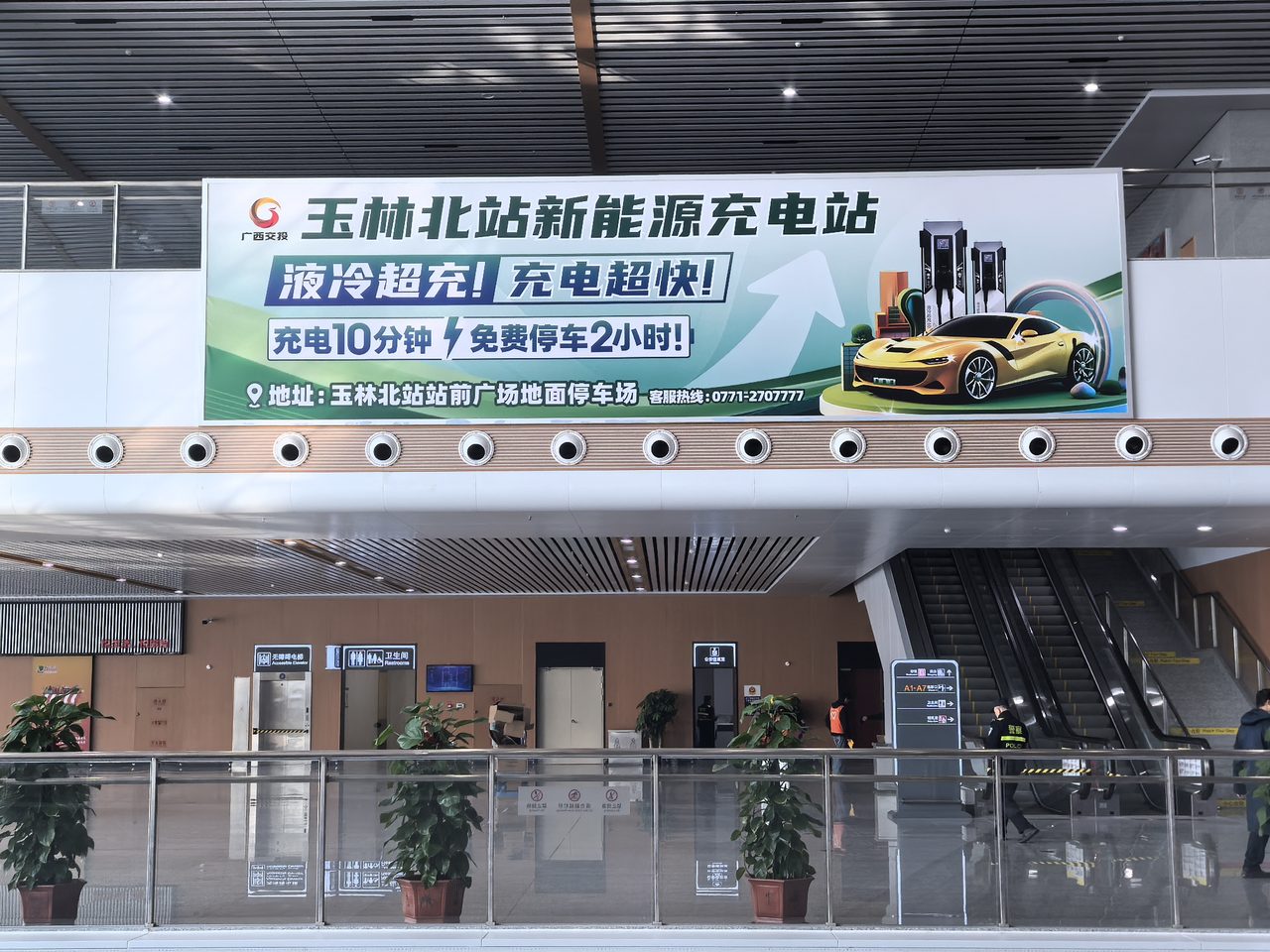 ▲ 站内已上刊广告实景。效果评估要把曝光、行为、认知三层数据分开看
三、认知层:看品牌有没有被记住
认知层最难量化,但也不是不能测。
最简单的方式:在投放区域做一个小样本电话调研或线上问卷。问两个问题:提到某类产品时,你第一个想到谁?最近一个月有没有在高铁站看到过某个品牌?
投放前后各测一次,看提示后品牌认知度和广告回忆度有没有提升。适合预算充足、看重长期品牌建设的客户。样本不用大,200到300份就够了,关键是投放前后同一群人或同一区域。
四、别把所有效果都归给高铁广告
很多老板容易犯一个错:销量涨了,全算在高铁广告上;销量跌了,全怪广告没用。
销量变化是多种因素叠加的结果。同期有没有做促销?有没有线上投放?有没有行业旺季?天气有没有影响?要把这些因素排干净,剩下的增量才比较接近高铁广告的真实贡献。
更科学的做法是多渠道归因。把高铁广告作为“品牌曝光”触点,线上广告作为“收割”触点,线下门店作为“转化”触点。三者配合,各自承担不同角色。
五、怎么让效果更可追踪?
投放前就想清楚三件事:目标是什么?怎么衡量?数据从哪来?
目标是招商,就统计展会期间咨询量和名片交换量。目标是卖产品,就统计二维码扫码量和门店客流。目标是品牌认知,就统计搜索指数和问卷结果。
 ▲ 站内通道广告。不同位置承担不同任务,评估时要对应到具体行为指标
数据从哪里拿?搜索指数用百度指数、微信指数;门店客流靠店内统计或POS系统;二维码扫码靠链接后台;电话咨询靠400后台或客服记录。
把这些写进合同。媒体方不一定能给你最终转化数据,但至少应该提供官方客流、上刊照片和播出排期。你自己再叠加行为数据,就能拼出完整效果。
数据越细,复盘越有价值。不要只问“有没有效果”,要问“哪类人群、哪个点位、哪个时段带来了效果”。
六、评估时间窗口别搞错
高铁站广告的效果不是今天上刊明天就能看到。曝光当天就有,但搜索量、到店量、认知度的变化通常要一到两周才能显现。
建议把投放周期前后各延长两周做对比。投放前两周是基线,投放期间是实验,投放后两周看余热。不要投放刚结束就下结论,也不要拿单周数据说事。
结语
高铁站广告有没有用,不能靠“我觉得”。
曝光量可以算,行为数据可以追,认知变化可以测。关键是投放前就设计好评估方式,而不是投完再想办法圆场。
把钱花出去之前,先想清楚怎么证明它花得值。建议每次投放后做一页复盘表,把目标、数据、结论写清楚,下次投放直接复用。
这才是专业品牌主该有的习惯。
—— 广西联屏传媒,南珠高铁南玉段广告独家运营方 | 李洪鑫 18878774848(微信同号)
English Version
After running a high-speed rail campaign, many brand owners say the same thing: "I feel like it worked."
"Feeling" is useless. High-speed rail ads aren't Douyin. You can't directly watch plays, clicks, and conversions. But that doesn't mean you can't measure them. If you design the evaluation before you spend, you can still settle the account.
Measurement works on three layers: exposure, behavior, and awareness.
1. Exposure layer: first figure out how many people saw it
Exposure for high-speed rail ads can be estimated from official passenger flow.
Yulin North Station currently handles around five to six thousand passengers a day. After entering, travelers stay 30 to 40 minutes. If an LED screen covers the whole waiting hall and we apply an 80% visibility factor, it actually reaches roughly 4,000 to 5,000 people a day. A lightbox in an entry corridor might only have a 30% to 50% visibility factor, because some people walk fast or stare at their phones.
▲ Wide view of Yulin North Station's waiting hall. Don't trust a verbal impression count; calculate it from passenger flow and the visibility factor of the exact spot.
Don't trust a publisher's offhand claim of "tens of thousands see it every day." Ask for official passenger numbers and the visibility factor for that exact spot, then calculate it yourself. Visibility differs a lot by location: the seating area is highest, corridor sides are next, and exit areas are lower.
2. Behavior layer: see if travelers moved
Exposure is only step one. The key is whether the ad made travelers act.
The simplest and most effective method: put a unique QR code on the creative. Scans are directly trackable. For store-oriented brands, the QR code can lead to a coupon page or store navigation page. Compare scan volume during the campaign to the period before, and the change is clear.
▲ Wall billboard above the ticket gates. A unique QR code turns the ad into directly trackable behavior data.
Even without a QR code, you can look at local brand search volume, map navigation requests to the store, website visits, and 400 hotline calls. Pull these numbers by week and compare them to the campaign period. If searches rise during the run, the ad is at least making people remember you.
More directly: count store foot traffic. Ask the store manager to record daily visitors and compare with the month before. If the ad pushes an in-store offer, traffic change is the most direct answer.
▲ A live ad inside the station. Evaluate exposure, behavior, and awareness as separate layers.
3. Awareness layer: see if the brand was remembered
Awareness is the hardest to quantify, but it's not impossible.
The easiest way: run a small phone survey or online questionnaire in the target area. Ask two questions: when you think of this product category, which brand comes to mind first? Have you seen a certain brand at the high-speed rail station in the last month?
Test once before the campaign and once after. See if prompted brand awareness and ad recall improve. This suits clients with enough budget and a long-term brand-building goal. You don't need a huge sample; 200 to 300 responses are enough. The key is to test the same area or group before and after.
4. Don't give the high-speed rail ad all the credit or blame
Many owners make the same mistake: sales go up, it's all because of the rail ad; sales go down, the ad is useless.
Sales change comes from many factors. Was there a promotion at the same time? Online spend? Seasonal peak? Weather? Strip those out, and the remaining lift is closer to the real contribution of the rail ad.
A better approach is multi-touch attribution. Treat the rail ad as the brand-exposure touchpoint, online ads as the harvest touchpoint, and the physical store as the conversion touchpoint. Each plays a different role.
5. How do you make results more trackable?
Before launching, decide three things: what's the goal? How will you measure it? Where will the data come from?
If the goal is investment promotion, count inquiries and business cards exchanged during the event period. If the goal is product sales, count QR scans and store traffic. If the goal is brand awareness, count search index and survey results.
▲ Station passage billboard. Different positions serve different jobs; match each one to a concrete behavior metric.
Where does the data come from? Search index from Baidu Index and WeChat Index. Store traffic from in-store counts or POS. QR scans from the link backend. Phone inquiries from the 400 backend or customer service records.
Write these into the contract. The publisher may not be able to give you final conversion numbers, but it should at least provide official passenger flow, live photos, and broadcast schedules. Add your own behavior data, and you can piece together the full picture.
The more detailed the data, the more valuable the review. Don't just ask "did it work?" Ask which audience, which site, and which time slot drove the result.
6. Don't get the evaluation window wrong
High-speed rail ad effects don't appear the day the ad goes live. Exposure happens immediately, but changes in search volume, store visits, and awareness usually take one to two weeks to show.
Extend the comparison window by two weeks before and after the campaign. The two weeks before are the baseline, the campaign period is the test, and the two weeks after capture residual effect. Don't conclude the moment the campaign ends, and don't judge from a single week.
Conclusion
Whether high-speed rail advertising worked can't be decided by gut feeling.
Exposure can be calculated. Behavior can be tracked. Awareness can be measured. The key is to design the evaluation before spending, not to make excuses after.
Before you hand over the money, figure out how you will prove it was well spent. After each campaign, write a one-page review: goals, data, conclusions. Reuse it next time.
That's the discipline professional brand owners should have.
— Guangxi Lianping Media, exclusive operator of Nanzhu High-Speed Rail Nanyu section ads | Li Hongxin 18878774848 (WeChat same number)