After the new year, a company's biggest headache isn't starting work. It's having no people. Workshops need staff, stores need staff, factories need staff, but every year people head to Guangdong. Yulin is a major labor-exporting city; each Spring Festival, millions of Guangxi people take the train south. Firms want local hires, yet job notices posted anywhere get no eyes. One place gets looked at daily: the railway station.
1. Where Do Returning Workers Step First
2026 Spring Festival travel, Yulin train depot expects 2.17 million passengers, 54,000 a day, up 1.8% from 2025. Most are migrant workers. They enter and leave Yulin through Yulin North and Xingye South stations.
Yulin North is the Nanyu section hub. Xingye South serves Xingye County, a big labor-export county. On the eighth day of the first lunar month 2026, Guangxi's "warm employment" return-to-Guangdong charter launched from Xingye, about 600 workers on train D3627 to Guangzhou South. Guangxi's migrant workforce tops 14 million, and the post-holiday southbound flow is just a slice of it.
People leave from there; job ads should hang there. Yulin North now runs 5,000 to 6,000 a day, reaching only Nanning East. After the Yucen section opens end-2026 and the full link in 2027, daily flow will hit 15,000 to 20,000. Booking recruitment ads now, priced on today's flow, locks a cheap slot early.
2. Others Already Hire at the Station
Hiring at the station isn't new. Spring 2026, Anhui Qimen set a help desk at the high-speed south station exit, handing job sheets to returnees. Heilongjiang Chengzihe held a station job fair, 30 firms, 200-plus posts. Hangzhou South went further: "job on arrival," nearly 80 firms, nearly 6,000 posts, over 5,000 attendees, 810 preliminarily matched on the spot.
These places share one logic: just off the train, the job-search urge peaks. The station is the first touchpoint. Government stages are temporary; a firm's own standing sign catches the everyday flow.
3. A Standing Light Box Beats a Temporary Booth
A booth lasts days. Rent a station light box, hang the ad a month or a year; returnees, business travelers, visitors all see it both ways.
Yulin North and Xingye South are operated by Lianping Media (project HG2026-FW112, six-year lease): 97 light boxes, one 152 sqm full-color LED, 14 dual-sided 4K ad machines. Recruitment ads suit long-hang light boxes, plus screens rotating the key points: pay, role, contact, on loop. The LED hits hard and fits a company image, not a dense job table.
Among the three stations, Xingye South fits recruitment best. It serves a labor-export county; a returnee sees hometown posts the moment they step out, and may pause to ask before heading to Guangdong. The mix is plain: light boxes carry the role overview long-term, screens rotate single posts separately, factory vs store hires split, LED backs the company image, not the job table. All three together, the returnee sees the overview on entry, the single post while waiting, and still remembers the name on exit.
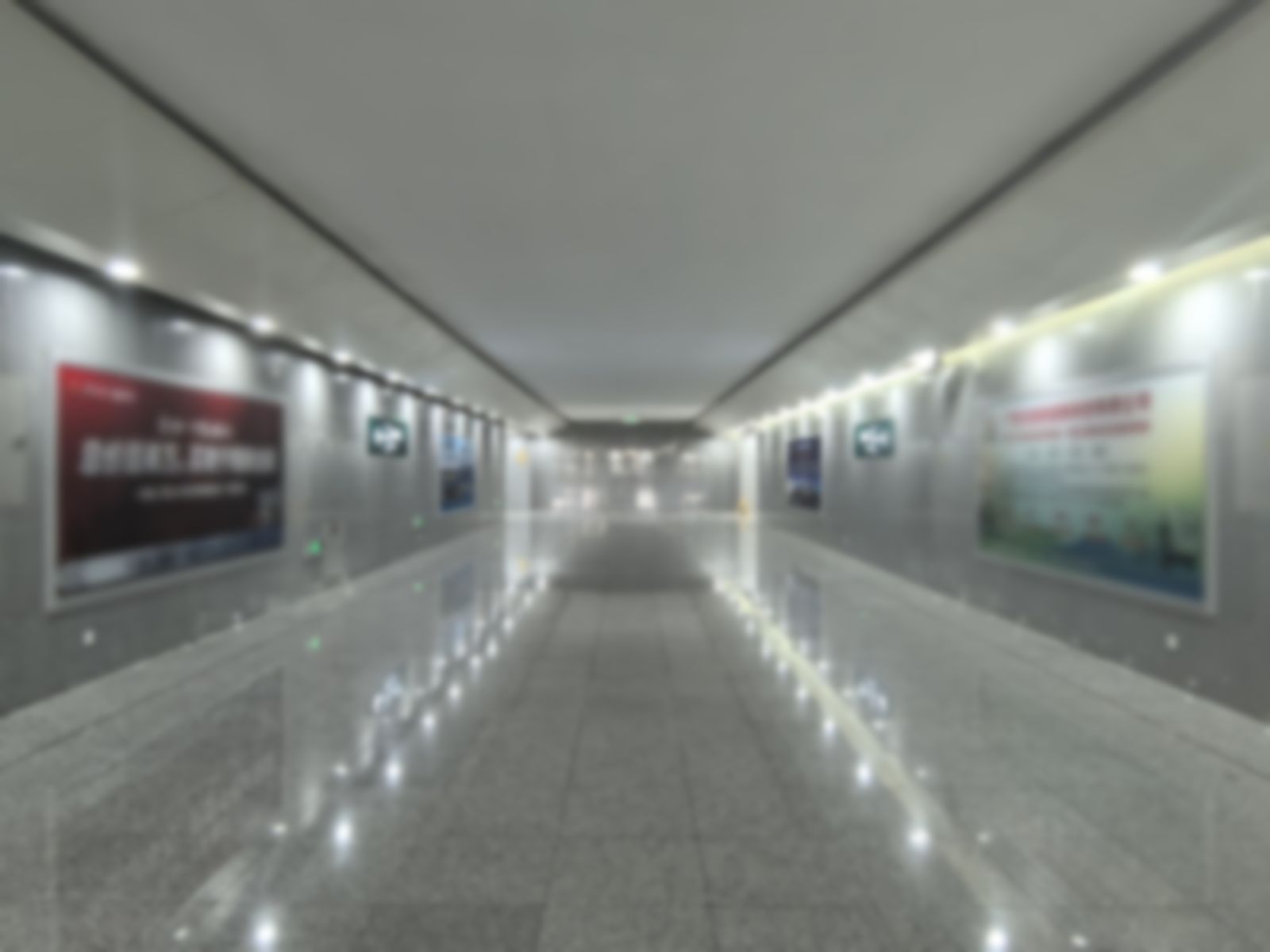 ▲ The exit passage is the first stretch leaving the station; a good spot for recruitment info.
4. How to Write a Job Ad People Actually Read
Don't paste the full notice on the wall. Too much text, nobody reads.
Three things done right: state the role, operator, sales, care; state pay as a range, 3,000 to 6,000; leave one person they can reach directly. QR in the corner, scan to join a group or fill a form. Local Nanning and Yulin firms can do exactly this, lead with "work at your doorstep," and spell out why that beats going to Guangdong.
Local manufacturers, electronics plants, food factories feel the worst shortage at peak season. Putting a recruitment ad at the station puts a word in the returnee's ear right at the stay-or-go decision. A few pits to skip: text too small reads as nothing from distance; don't leave only a website, leave a number they can dial; no absolute claims, the Advertising Law covers that. State "board, meals, rest days" clearly, it beats a vague "good pay."
Which trades fit the station best? Electronics-plant operators, food-factory packers feel the widest peak-season gap; local services like housekeeping, maternity, and care workers hire exactly county locals; logistics sorting and warehousing need people year-round. These roles share one thing: the worker stays local, and the returnee is precisely the most unsettled, most likely to pause at the doorstep.
 ▲ The LED fits a company image; let light boxes and screens carry the job details.
5. Get In Now, Catch the Tail of Return Season
The Spring Festival peak passed, but summer travel, Mid-Autumn, National Day, next year's Chunyun will come. Railway ads run on issue cycles; book a month ahead to catch the next wave.
Guangxi plans over 1,500 dedicated job fairs in Q1 2026, releasing no fewer than 600,000 posts. Firms are already fighting for people. Instead of waiting for the government to build the stage, put up your own sign at the station. Lianping's three-station package runs two to three tenths cheaper than buying apart; a year-long recruitment ad costs tens of yuan a day, cheaper than one job fair.
A recruitment ad isn't "hang and done." Book at least a month, covering a full return-to-work cycle; rotate the on-screen focus weekly, electronics one week, housekeeping the next, so different people each find their match. Lianping can schedule by the three stations' flow: which week peaks, which screen to use, fixed a month ahead.
An Xingye electronics plant once needed 300 peak-season workers and the boss drove to villages posting notices. After two months of light-box recruitment at Xingye South, returning relatives saw it, spread word back home, and the arrival rate beat prior years. The plant manager's line: that station sign works better than the village loudspeaker.
— Lianping Media, Exclusive Ad Operator for Nanzhu Railway Nanyu Section | Li Hongxin 18878774848 (WeChat)