A Yulin local leaving town packs beef jerky in the luggage, nine times out of ten. It's cut from hindquarter beef, cured, roasted, air-dried, salty with a sweet note. In 2011 it got the national geographic indication and is intangible heritage. Its peer, Yulin beef brisket noodles, entered the autonomous-region heritage list in 2023 and is now a top-ten Yulin consumer brand. These home flavors stayed in locals' mouths. Now they belong on the station wall.
1. Hengzhou Already Moved First
Hengxian jasmine tea held a combined brand value of 22.413 billion yuan in 2024. Hengzhou didn't spend only on expos; it named a "good jasmine of Hengxian" high-speed train and ran brand spots on trains to Shanghai and Shenzhen. Hengzhou has over 60 local jasmine-tea brands; it put ads into the railway because the riders are exactly its buyers and tourists.
This is a note to Yulin: local specialty on the railway isn't burning money, it's a road already paved. If a county-level city can do it, Yulin can do better. Yulin jerky and brisket noodles are already Guangxi names; what they lack isn't fame, it's the exposure that makes an outsider remember them the moment they step off the train.
2. Three Stations, Three Crowds
After the Nanyu link, Nanning to Yulin is 48 minutes. A weekend trip from Nanning for a bowl of brisket noodles became a half-day outing. Yulin North is the tourist gateway; an ad for noodles or jerky in the waiting hall plants the seed the moment they step out.
Hengzhou station is jasmine's origin; dealers from across China pass through. Geographical products like pomelo and jasmine shown there hand the buyer an origin card.
Xingye South serves Xingye County; Xingye tea is a geographic indication, and there are heritage snacks like waist cakes and pickles. A returnee seeing home flavor at their own station feels the pull at once. Yulin North's daily ridership keeps climbing, and weekend visitors from Nanning take a growing share. These people step off looking for food and sights; the station ad appears exactly when they decide. When the Nanyu link first opened, many didn't know what Yulin eats; now weekend pilgrims grow, and that station board is the first line spoken to an outsider.
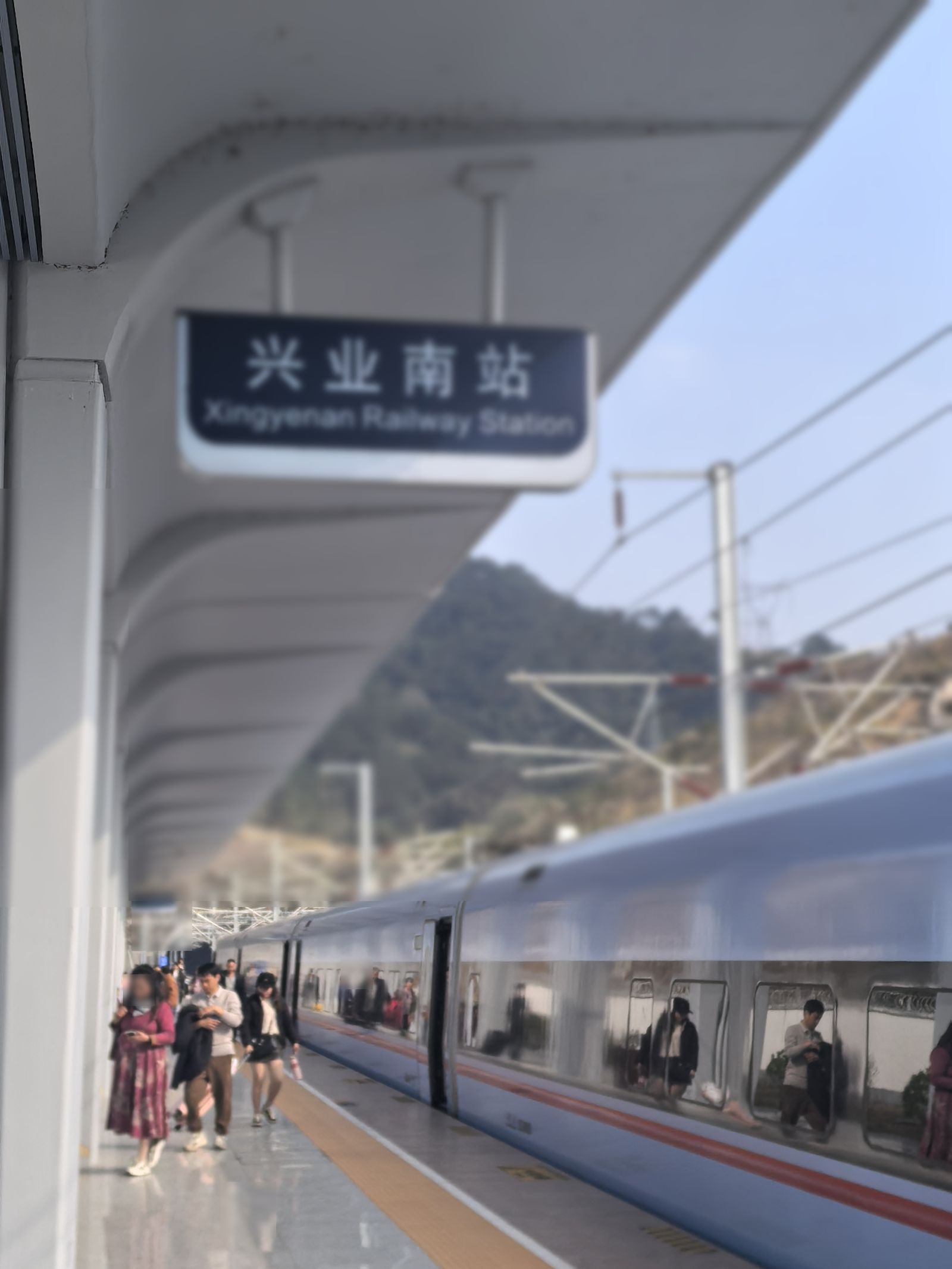 ▲ Xingye South serves the county; a returnee seeing home flavor at their own station connects at once.
3. Tourism Should Ride This Too
Yulin's tourism push has grown: food map, e-travel booklet, tourism ambassador, and a 2026 combined route of Zhenwu Pavilion and Rongzhou ancient town that lifted nearby homestays. Rongxian pomelo is stronger: 2025 planting area 245,000 mu, output 430,000 tons, value 4.5 billion yuan, over 100,000 jobs, plus a "Rong Xiaoyou" IP, and over 8,000 rural e-commerce and micro-business points selling pomelo across the county.
These assets posted only on short video aren't enough. A tourist arriving at Yulin North and looking up at a travel poster beats ten feed scrolls. Yulin is a "National Excellent Tourism City"; in recent years it bundles food and scenery, and visitors come not just to transfer but to eat and play on purpose. Zhenwu Pavilion, Rongzhou ancient town, Darong Mountain, Wucai Pasture, these spots used to rely on visitors searching themselves. Put the route map at Yulin North and you hand them a guide the moment they land, pulling along lodging and dining.
4. How Local Brands Avoid Waste
Restaurants shouldn't buy a big LED billboard; rotate the menu and store location on screens, drop a navigation QR. Specialty firms put the GI mark and packaging on light boxes, build the "origin" persona. Tourism units make one route map showing how to reach the site from the station.
Lianping Media holds the three-station package (project HG2026-FW112): 97 light boxes, 152 sqm LED, 14 ad machines; the package runs two to three tenths cheaper than buying apart.
One thing before buying: know who you want, tourists, dealers, or returnees. Yulin North for tourists and business riders, Hengzhou for jasmine-tea dealers, Xingye South for returnees and county daily flow. Don't mix the stations up. Three moves work for specialty on the railway: show the GI mark, consumers trust it; show the packaging, they remember the look; drop an e-commerce QR, they scan to order or add WeChat. Origin plus e-commerce, the station is the best doorway.
Station light boxes are read from a distance: the product should fill most of the frame, the brand name big, the GI mark clear, no pile of fine print. Screen rotation shouldn't be too fast, five to six seconds a slide so people read before it cuts. These details decide whether a board truly works or just fills space.
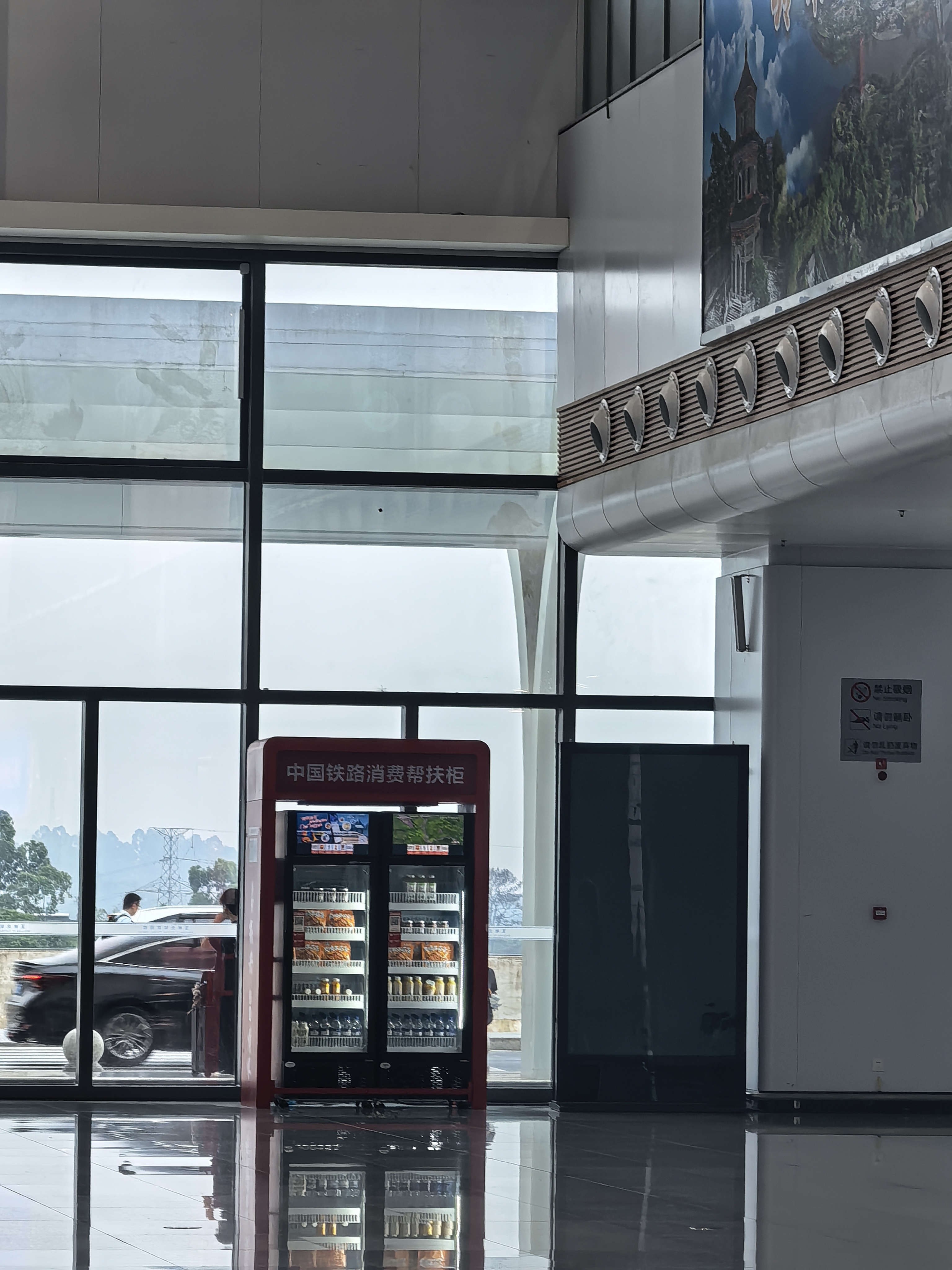 ▲ Screens suit restaurants rotating menu and store location, plus a navigation QR to drive footfall.
5. The Windows That Matter Most in a Year
The Spring Festival return surge is the golden window for home brands to show their face; January to February concentrates returnees, and one station light box then equals several at ordinary times. The Zhuang "Third of March" is Guangxi's own long holiday; intra-region short trips spike and Nanning-to-Yulin-North visitors rise sharply, so for those two weeks tourism and dining posters should go up.
National Day and summer are tourist peaks; the travel-route poster should go up a month early, not after people arrive. A month before Mid-Autumn, gift-box specialties like pomelo and mooncakes belong in the light boxes; a returnee grabbing two boxes on the way out is a face-to-face sale. Specialty and tourism shouldn't look the same all year; follow the calendar and spend where the crowd is densest.
By station: Yulin North watches weekend Nanning visitors and holiday tourists, Hengzhou watches the jasmine buying season (spring tea peaks March to May), Xingye South watches Spring Festival returns and pre/post-harvest. Split the budget into chunks and hit each station's own peak; it beats dumping it all on a full year.
— Lianping Media, Exclusive Ad Operator for Nanzhu Railway Nanyu Section | Li Hongxin 18878774848 (WeChat)